Candlesticks
Candlestick Anatomy Quiz: Test Your OHLC Reading
A candlestick anatomy quiz with answers: open, high, low, close, bodies, and wicks. Find the gaps in your candle reading, then drill it on real charts.
Updated 2026-06-15
Candle anatomy is the one piece of chart knowledge you cannot afford to be slow at. Every pattern, every structure read, every entry decision starts with instantly knowing what a candle’s body and wicks are saying.
This page is a self-test. If you need the concepts first, read anatomy of a candlestick, then come back and check yourself honestly.
The four prices, briefly
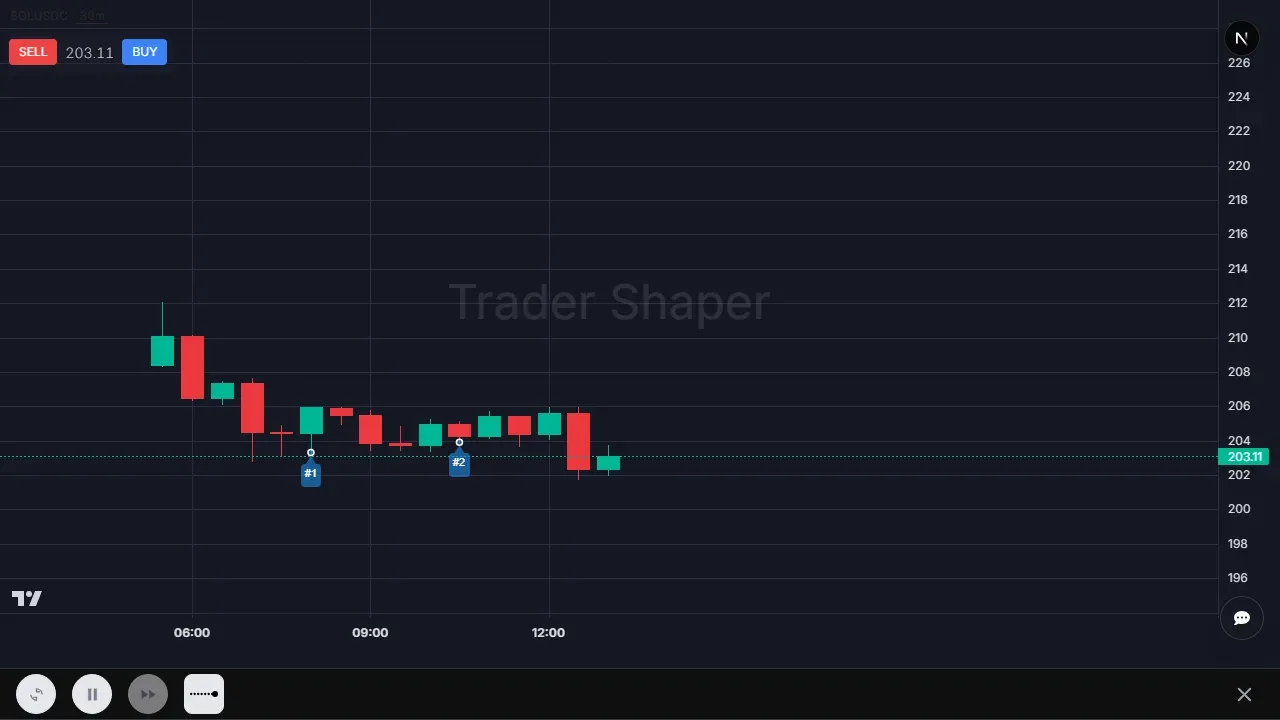
Every candle compresses a period of trading into four prices: the open (first trade of the period), the close (last), and the high and low (the extremes reached in between). The body spans open to close; the wicks stretch to the high and low.
That’s the vocabulary. The skill is reading combinations at a glance:
- A long body with tiny wicks = one side controlled the period nearly start to finish.
- Long wicks with a small body = a battle; price traveled far but was pushed back.
- A wick on one side only = an excursion that was rejected — someone defended that area.
- On a green candle the open is the bottom of the body; on a red candle it’s the top. Trivial to say, and still misread by beginners under time pressure.
Why speed matters
On a live chart you don’t get time to reconstruct each candle. Structure reads are built from dozens of candles at once, and the reading has to happen at recognition speed — the way you read words without spelling them out. If any question below makes you pause, that’s a gap worth drilling.
How to take this quiz honestly
Do not answer by looking for the nearest pattern name. Answer by reconstructing the candle. Where did it open? Where did it close? Which side of the range did price reject? Did the candle finish near an extreme, or did it give back most of the move?
If you have to draw the candle mentally before answering, that is useful information. It means the concept is understood but not fluent yet. The goal is for a red candle’s open, a green candle’s close, a long upper wick, and a small body to be recognized immediately.
Use the same standard on real charts. Pick a candle, cover the next few candles if needed, and describe the period without prediction language. “Buyers pushed higher but sellers rejected the high” is a candle read. “This will go down” is a forecast. The quiz trains the first skill.
What wrong answers usually reveal
When traders miss candle anatomy questions, the error usually comes from one of three places. They confuse color with control, they forget that wicks are failed extremes, or they judge a candle without comparing the close to the full range.
For example, a green candle with a long upper wick is not automatically strong. It closed above the open, but it failed to hold the high. A red candle with a long lower wick is not automatically weak. It closed below the open, but sellers failed to hold the low. The anatomy gives you the exact story; color only gives you the headline.
Once those distinctions feel automatic, the rest of chart reading gets easier. Swing points, support and resistance, and candlestick patterns all depend on reading these basic candle parts quickly and accurately.
Extra drill: reverse engineer the candle
A useful way to strengthen OHLC fluency is to work backwards from a candle description. Before looking at a chart, picture this candle: red body, long lower wick, close near the middle of the range, almost no upper wick. Where is the open? Where is the close? Which part of the move failed?
That drill matters because real chart reading is fast. You will not always have time to slowly label each component. The answer should appear as a visual object in your mind. Red body means the open is above the close. Long lower wick means price traded below the body and recovered. Close near the middle means neither side fully controlled the period.
Try the same drill with a green candle that closes exactly at the high. The open is at the bottom of the body, the close is at the top, and there is no upper rejection. That reads very differently from a green candle with a long upper wick, even though both are green.
Reverse engineering forces you to connect vocabulary with visual meaning. It also exposes the most common weak spot: traders can define OHLC, but they cannot use the definitions quickly under chart pressure.
How to score your result
Treat this quiz as a diagnostic, not a grade. A wrong answer about open or close means you should return to the anatomy page and drill basic candle construction. A wrong answer about wicks means you probably understand the candle parts but are not yet reading failed extremes. A wrong answer about context means the next step is candle-reading practice, not more definitions.
Hesitation also counts. If you eventually get the answer right but need ten seconds to reason it out, that concept is not automatic yet. Real charts do not wait while you reconstruct every candle. The goal is instant recognition, then thoughtful interpretation.
When you retake the quiz, change the order of the questions or answer them from memory before opening the page. Familiarity with the page layout can feel like skill, but the skill is recognizing the same candle logic on a new chart.
Test yourself
Answer each one before expanding. Hesitation counts as a miss — the goal is recognition speed, not just correctness.
1. On a red candle, where is the open — top or bottom of the body?
Show answer
Top of the body. Red means the close is below the open, so price fell over the period. On a green candle it's reversed: open at the bottom, close at the top. This must be automatic — entry, stop, and pattern reads all depend on it.
2. A candle has a long lower wick, a small body near the top of its range, and almost no upper wick. What happened during that period?
Show answer
Sellers drove price down significantly, then buyers pushed it all the way back up to close near where it started or higher. The low was reached and rejected. Whatever the candle's color, the story is a failed move down — someone defended the lower prices.
3. Can a green candle be bad news for buyers? Give a case.
Show answer
Yes. Context decides. A green candle with a long upper wick closing well off its high shows buyers tried to rally and were sold into. A tiny green body after a strong advance can signal momentum fading. Color summarizes open vs close — it doesn't summarize the battle.
4. Two candles have identical bodies. One has long wicks on both sides, the other almost none. Which period was more contested?
Show answer
The long-wicked one. The range (high to low) shows how far price traveled; the body shows where it settled. Identical settlements after very different journeys mean very different periods — the wicked candle saw both sides fight and fail at the extremes.
5. A candle's high equals its close. What does that tell you, and why is it notable?
Show answer
Price finished the period at its strongest point — buyers were in control right up to the final trade, with no pullback from the high. It's the kind of detail that matters at a resistance zone: closing on the high reads very differently from a long upper wick at the same level.
Frequently asked questions
What does OHLC stand for in trading?
Open, High, Low, Close — the four prices each candlestick encodes for its time period. The open and close form the candle's body; the high and low form the tips of its wicks.
What's the difference between a candle's body and its wicks?
The body spans the open and close — where price started and settled. Wicks span the extremes price reached but didn't hold. Bodies show the outcome of the period; wicks show the fight along the way.
How long does it take to read candles fluently?
Knowing the parts takes minutes. Reading them at recognition speed — the way you read words — takes repetition on real charts with feedback. That's a perception skill, and it's built with reps, not rereading definitions.