Patterns
Candlestick Patterns Practice
Practice candlestick patterns in context: pin bars, engulfing candles, inside bars, false positives, and free real-chart drills.
Updated 2026-06-12
Candlestick patterns are useful only when they are read in context. A pin bar, engulfing candle, or inside bar is not a command to buy or sell. It is a small piece of chart evidence that has to agree with location, structure, and the candles around it.
This page is the pattern-practice hub. Start here if you know the names of common patterns but still struggle to decide which examples matter on a real chart. The goal is not to collect more pattern definitions. The goal is to train pattern recognition with enough judgment to skip weak setups.
What this skill actually is
Pattern reading has two layers. The first layer is shape recognition: long wick and small body for a pin bar, body-over-body reversal for an engulfing candle, smaller range inside the prior candle for an inside bar. That part is mechanical.
The second layer is the real skill: asking what the pattern interrupted, rejected, or compressed. A bullish pin bar at a defended support zone says something different from the same shape in the middle of a range. A clean engulfing candle after a real selling push carries more information than an average candle engulfing a tiny doji. An inside bar after expansion shows compression; inside a messy range, it may show nothing worth acting on.
Beginners usually stop at layer one. They see the famous shape and treat the label as the answer. Trained readers use the shape as a prompt for better questions:
- What price area did this pattern form at?
- Did the candle close strongly, or did the opposing side answer immediately?
- Is the broader chart trending, ranging, or transitioning?
- Is this pattern visible at normal zoom, or am I hunting for it?
- Would this still look meaningful if the name of the pattern were removed?
Those questions prevent the common pattern-trading mistake: treating every textbook shape as equal.
The learning path
Work through these pages in order. Each one focuses on discrimination, not memorization:
- Pin bar practice - long-wick rejection candles, where they matter, and why many clean-looking pins fail.
- Engulfing pattern practice - two-candle power shifts, valid versus weak engulfings, and examples with answers.
- Inside bar pattern - compression, mother bars, and why an inside bar is a context clue rather than a full trading plan.
Before spending much time on patterns, make sure the foundation is solid. If candle bodies, wicks, and closes are not automatic, start with candlestick reading practice. If you cannot classify trend and range yet, work through market structure first. Patterns sit on top of those skills; they do not replace them.
How to practice patterns without risking money
Good pattern practice has a simple loop: fresh chart, committed answer, feedback, repeat. Looking at the same saved examples does not build the same skill, because hindsight makes every valid pattern look obvious and every failed pattern look avoidable.
Use a chart you have not studied before. Find the pattern candidate. Then write the full read before checking anything:
- The pattern name.
- The location on the chart.
- The surrounding structure.
- The reason it is strong, weak, or not worth attention.
That last part matters most. A beginner asks, “Is this a pin bar?” A trained reader asks, “Is this pin bar meaningful here?” The second question is what protects you from overtrading patterns.
Pattern examples from the app
The screenshots below are not decorations. Each one shows a different pattern job: rejection, compression, or indecision. The point is to connect the name of the pattern with the chart condition that gives it meaning.
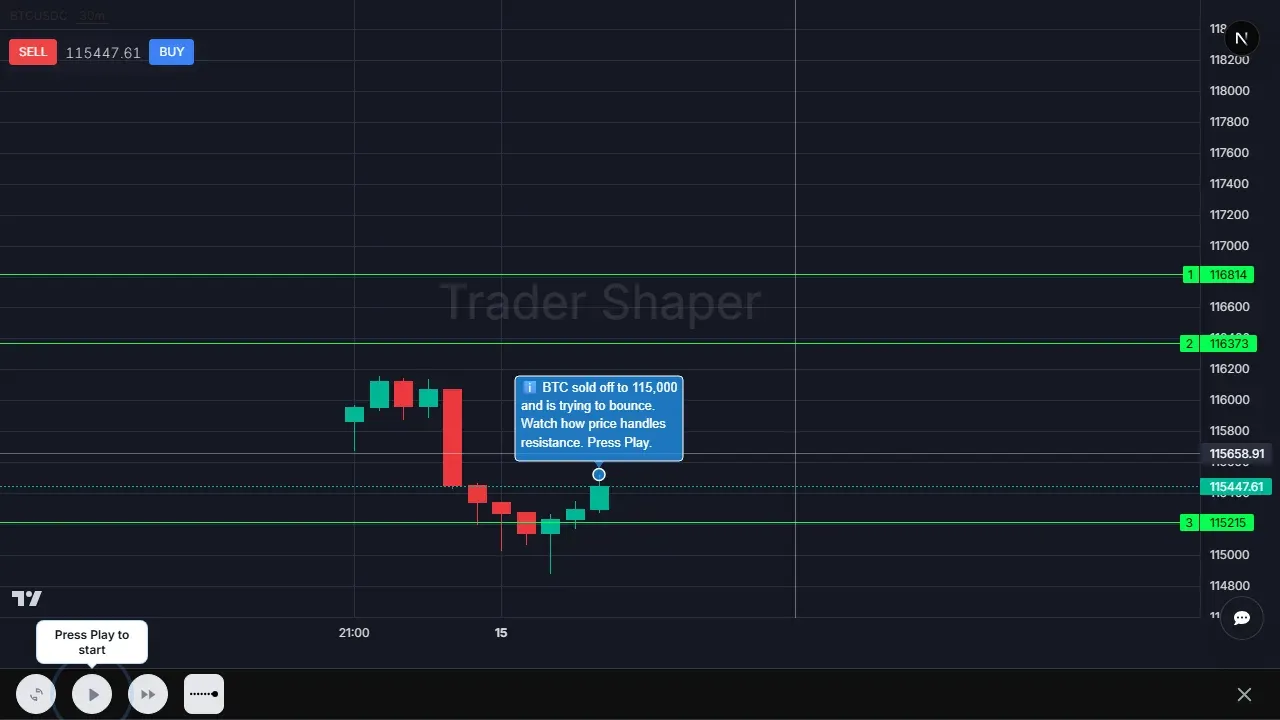
Pin bar: rejection at an area
In this drill, price sells off into a lower area, then a candle rejects the low and pushes back up. That is the kind of context a pin bar needs: not just a long wick, but a failed push into a place where price might react.
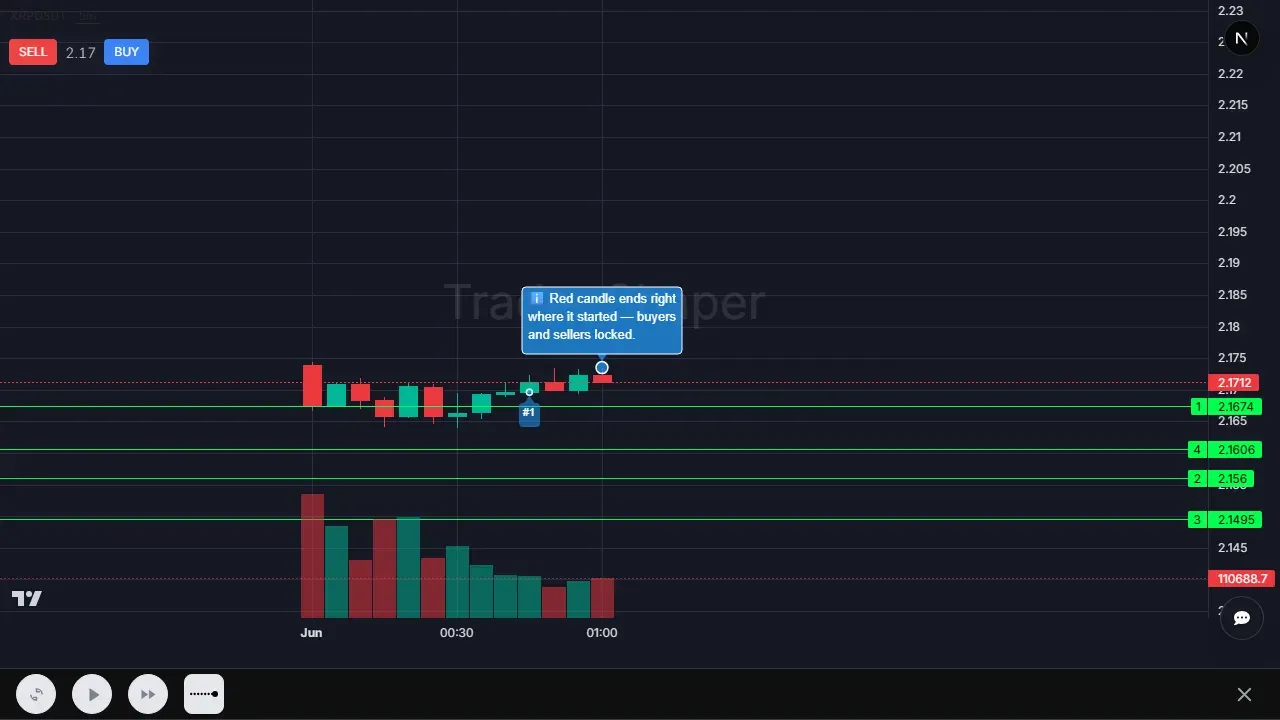
Inside bar: compression after movement
This inside-bar style frame shows the opposite problem: price has tightened and the candles are no longer expanding. The useful read is not “buy” or “sell.” The useful read is compression: buyers and sellers are temporarily locked.
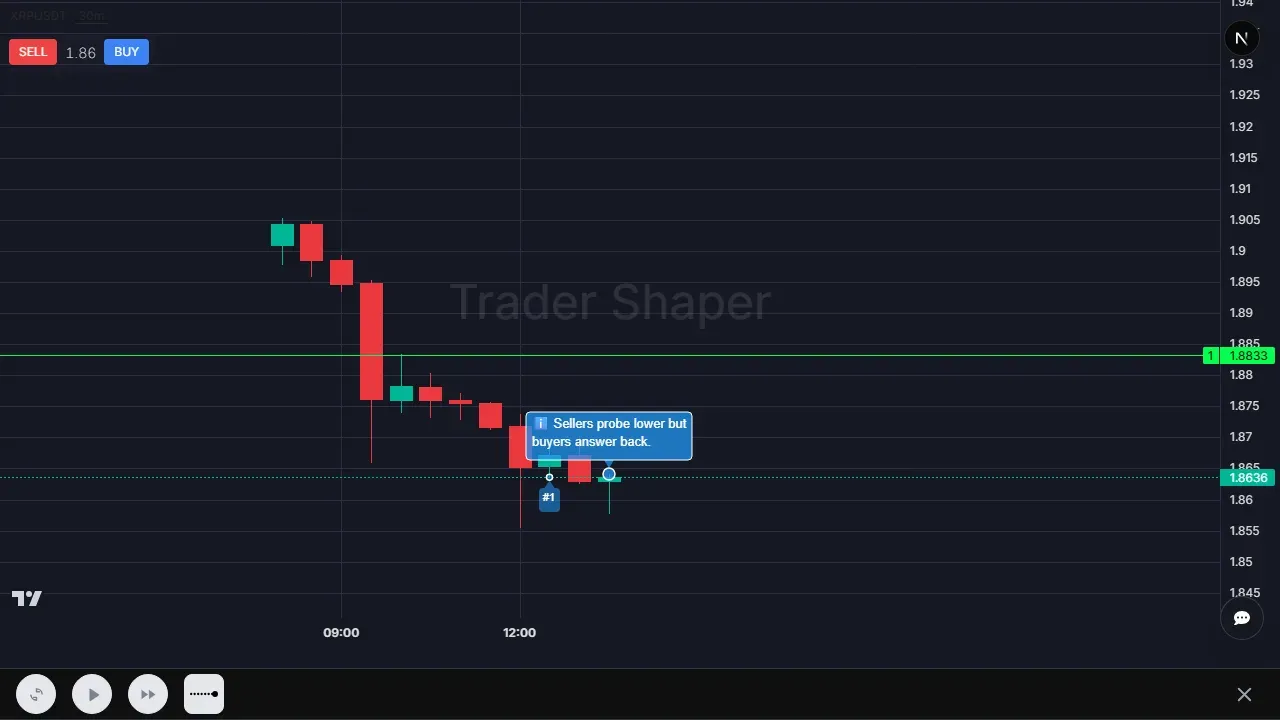
Doji: indecision after pressure
A doji or doji-like candle matters most after a push. In this frame, sellers drove price lower first, then the small-bodied candle shows buyers answering back. The pattern is useful because of the prior pressure and the reaction, not because the candle has a famous name.
Common false positives
The most common false positive is the orphan pattern: a correct shape with no chart reason behind it. A pin bar in empty space, an engulfing candle that only engulfs a tiny doji, or an inside bar buried in random chop may be technically labelable, but weak as evidence.
The second false positive is late-trend excitement. A bullish pattern after a long one-way run may show strength, but it may also show the last wave of enthusiasm. Strong candles and sustainable opportunity are different judgments. Pattern practice should train you to see both at once.
The third false positive is over-zooming. If you have to zoom in until a pattern appears, the market probably did not care about it. Patterns that matter tend to be visible without forcing the chart.
Checklist: pattern worth practicing
- The shape is clear at normal zoom.
- It formed at a meaningful area, not in empty space.
- The close supports the pattern's story instead of weakening it.
- The broader structure gives the pattern context.
- You can explain why weak lookalikes should be skipped.
Interactive practice
Practice patterns on real charts
Use the skill map to drill candlestick patterns in chart context, with fresh examples and feedback instead of static screenshots.
Start learning free